Birding Echoes · Merlin Bird ID
Birding by ear, designed so it works for every birder
Role
Product Designer
Timeline
6 Months

Table of Contents
1
Blind birders already bird mindfully
2
Universal design as the method
3
Pitching Merlin and the research
4
Catching our own sighted bias
5
What we designed
6
Validation and impact
Spring 2027
On track to ship in the Merlin app
88.5%
Task clearance with blind, low-vision and novice birders
First
Generative research Merlin had run, and their first with blind birders
The opportunity
Birding apps are built around a checklist. Blind birders don’t bird that way.
Spot it, name it, log it, move on. Blind birders bird by ear, so they slow down and listen.
“Birds are a feeling, a way of life.”
A blind birder I interviewed
Universal design
I saw more than an accessibility gap. Start from blind birders, and the app gets better for everyone.
Blind and low-vision birders were the experts in this project, not an edge case to patch later. Every decision was checked against one question: does it still work with sound alone?
Start with
Blind birders
Already bird entirely by ear. Their way of birding set the brief.
→
Holds up for
Low-vision birders
Tested with screen readers and large-scale accessibility settings.
→
Checked against
Novice birders
Less visually reliant, often with no binoculars yet, and most of Merlin’s daily users.
→
Better for
Every birder
A slower, more reflective way to bird that needs no extra gear.
How might we…
bring the reflective mindset of mindful birding to everyone?
The pitch
No sponsor was lined up, so I pitched Merlin myself
Our program offered a pre-scoped project. I pushed the team to find our own partner, then built the business case and pitch deck around three things Merlin cared about.
An overlooked audience
Blind and low-vision birders were an underexplored user population.
A fit with their product
A research angle aligned with Merlin’s audio-first app.
A study ready to run
Fully scoped to fit inside their real roadmap constraints.
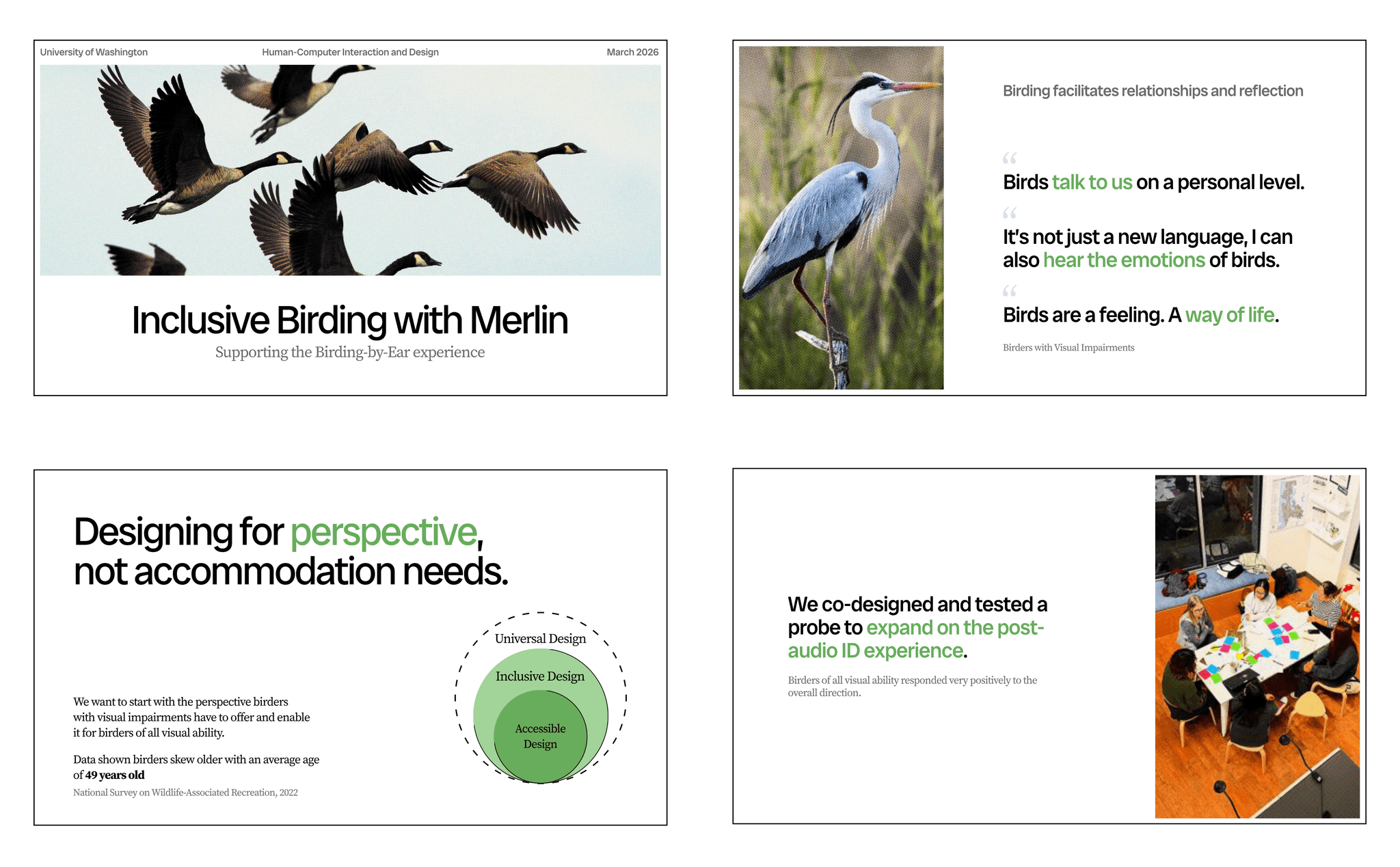
They signed on before we’d done a single interview.
Research
Everyone practiced mindful birding. Nobody called it that.
6
semi-structured interviews
2
field observations
~6,000
app reviews analyzed
2
mixed-visibility co-design sessions
“I had a biology quiz this morning, so I just went [birding]. Cleared my brain before I did a final study.”
Novice birder
“I’m just tuning into what I’m hearing around me… enjoying being outside and not worrying about when is my ride coming?”
Blind birder
The gap we found
No one went back to their past recordings unless they were sharing them with someone.
The trap
Nearly 100 ideas in, we caught ourselves designing for sight
I plotted every idea on a dashboard. Despite months of research with blind birders, most of our concepts still depended on vision.

the ideation dashboard I vibe coded to spot the pattern

So we went back to what blind and novice birders had asked for: to learn and to reminisce. We rebuilt the concept around those two needs, starting with sound.
What we designed
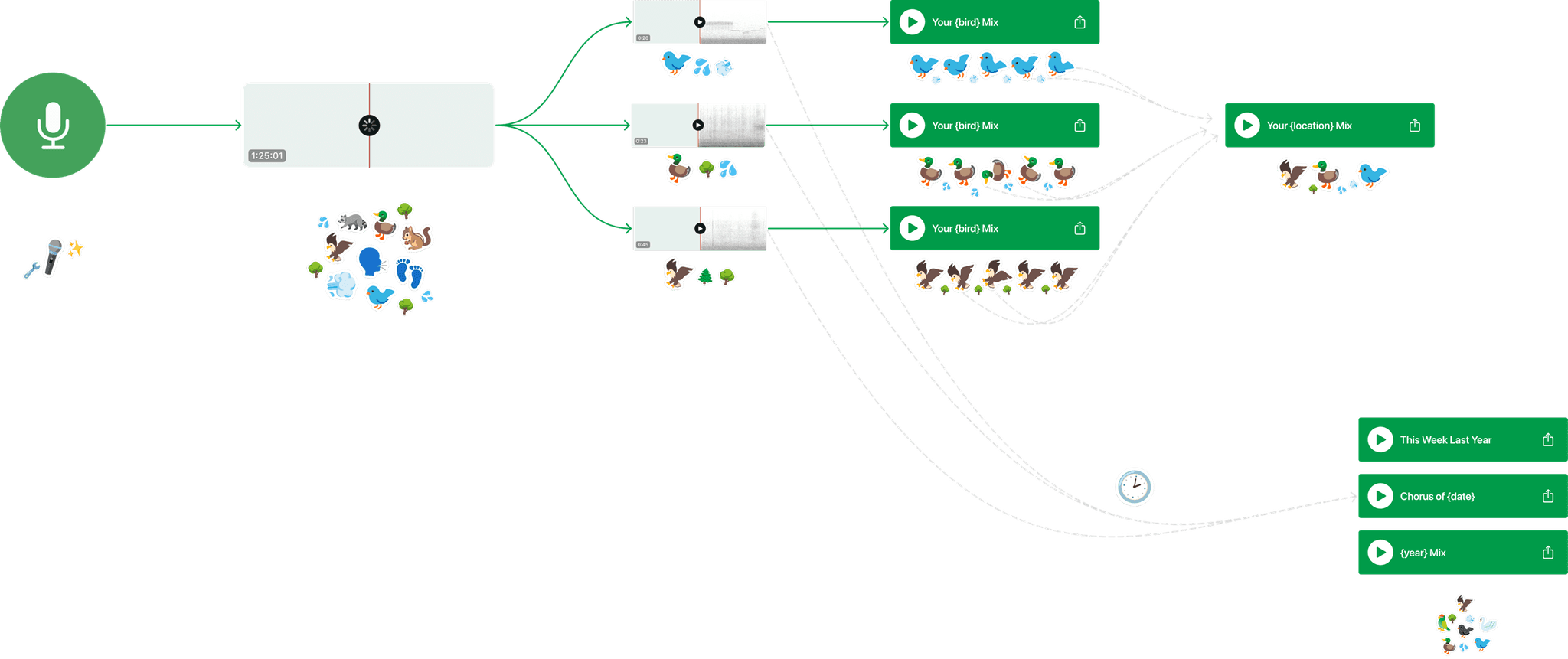
Three additions that prompt every birder to look back


one
My Recordings
Past recordings were buried three taps deep. Now they sit at the front of the app, one tap away.
Why it’s universal
Fewer steps matter most with a screen reader, and save every birder a search.
two
Birding Mixes
Birders turn their own recordings into a personal, shareable mix.
Why it’s universal
Sound is the content, so the experience is the same with or without sight.


three
Birding Insights
Your birding, quantified so you can learn from it and share it.
Why it’s universal
Tested to read clearly with a screen reader and at large text sizes.
Validation
88.5% task clearance, tested with both ends of the range
In the field
Novice sighted birders
On their own phones, to keep the context real.
Remote
Blind and low-vision birders
Checking screen reader support and large-scale accessibility.
“[I] like the idea of mindfulness and looking at the history. Now it’s like developing a personal story on birding.”
Blind birder
“People are gonna be blown away when seeing this. This is really cool.”
Low-vision birder
“The intentional side and sharing side of things would strengthen the birding community.”
Low-vision birder
Impact
The research changed who Merlin designs with
A first for Merlin
Generative research
They had never run any before this.
A first for Merlin
Blind and low-vision participants
Their first research with these birders.
Rare for Merlin
Novice birders
Seldom tested with, despite being most of the app’s daily users.
We’re still working with Merlin, carrying these findings into the product by spring 2027.
What I learned
Centering underrepresented users doesn’t narrow a design problem. It opens it up.
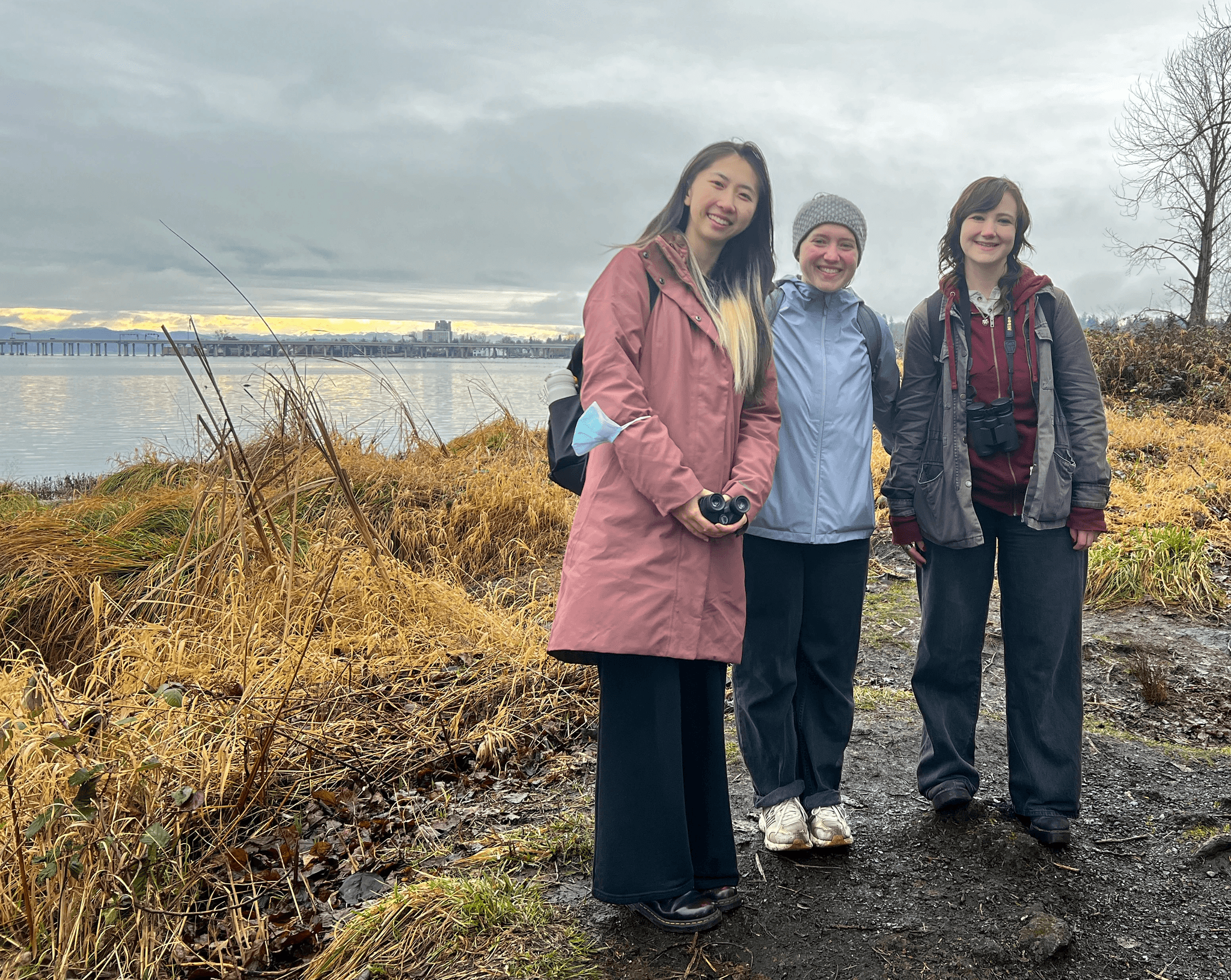
my first time birding with my team