

My Work

About Me

ResumΓ©

Reimagining Journaling at curaJOY

From Individual Prompts to Group-Centered Reflection

From Individual Prompts to Group-Centered Reflection

COMPANY

CuraJOY

ROLE

Lead Product Designer

TIMEFRAME

6 Weeks

YEAR

2024

At a glance

At a glance

What is this about?

I redesigned curaJOY’s journaling experience to move beyond static reflection and toward a more meaningful solution.

What did you do?

I lead a team of product designers through research, and then I translated ambiguous product goals into researchable questions, synthesized user insights, and redesigned the experience around AI-guided reflection and shared journaling.

Then what happened?

My solution helped reposition journaling from a low-priority feature to a core engagement driver aligned with curaJOY’s wellness mission.

Overview

curaJOY is a wellness platform focused on making mental health support more accessible through behavioral therapy, healthcare practices, and AI-driven insights. What makes it unique is its focus on supporting not just individuals, but entire family systems.

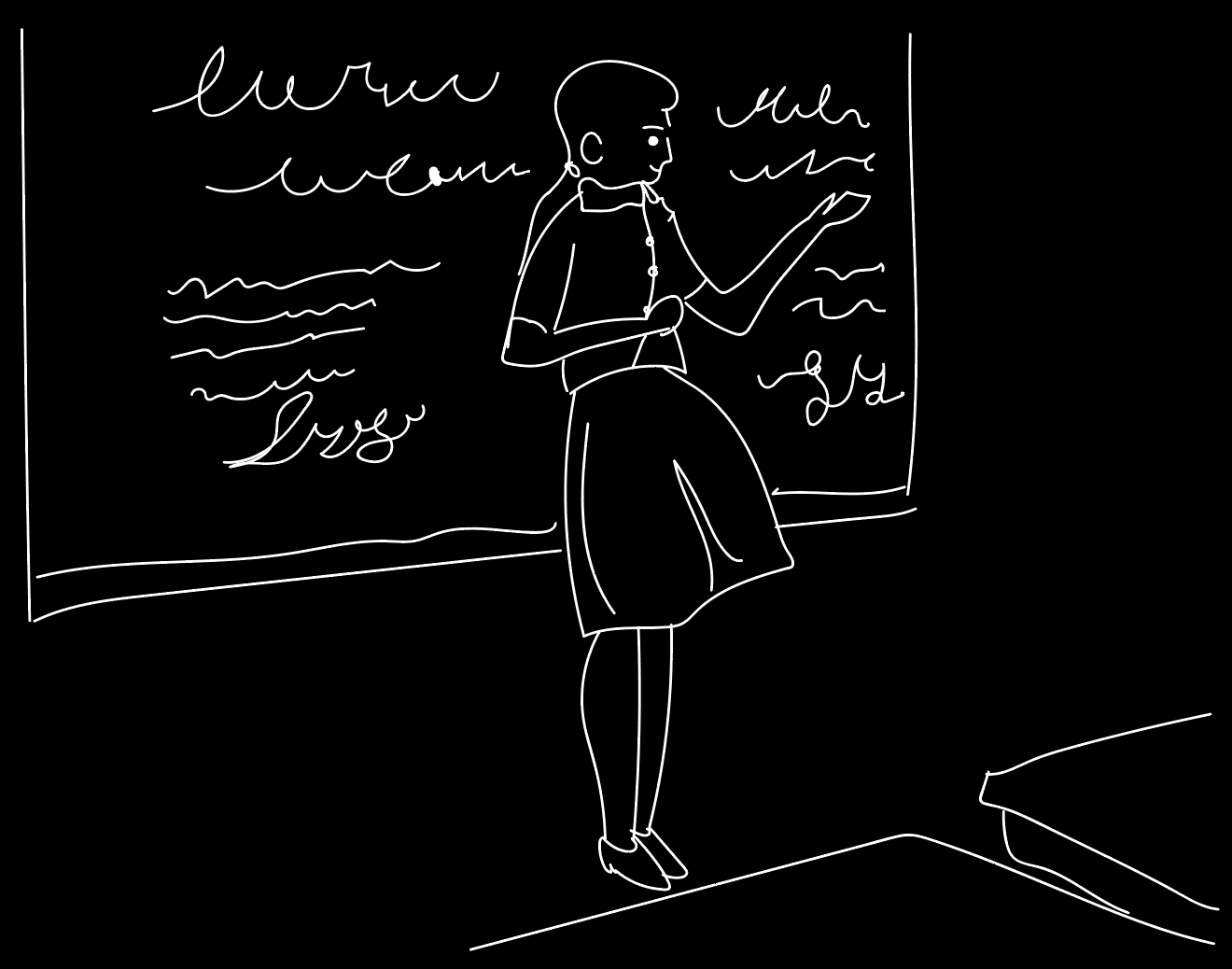
How can the teacher stop student outbursts?

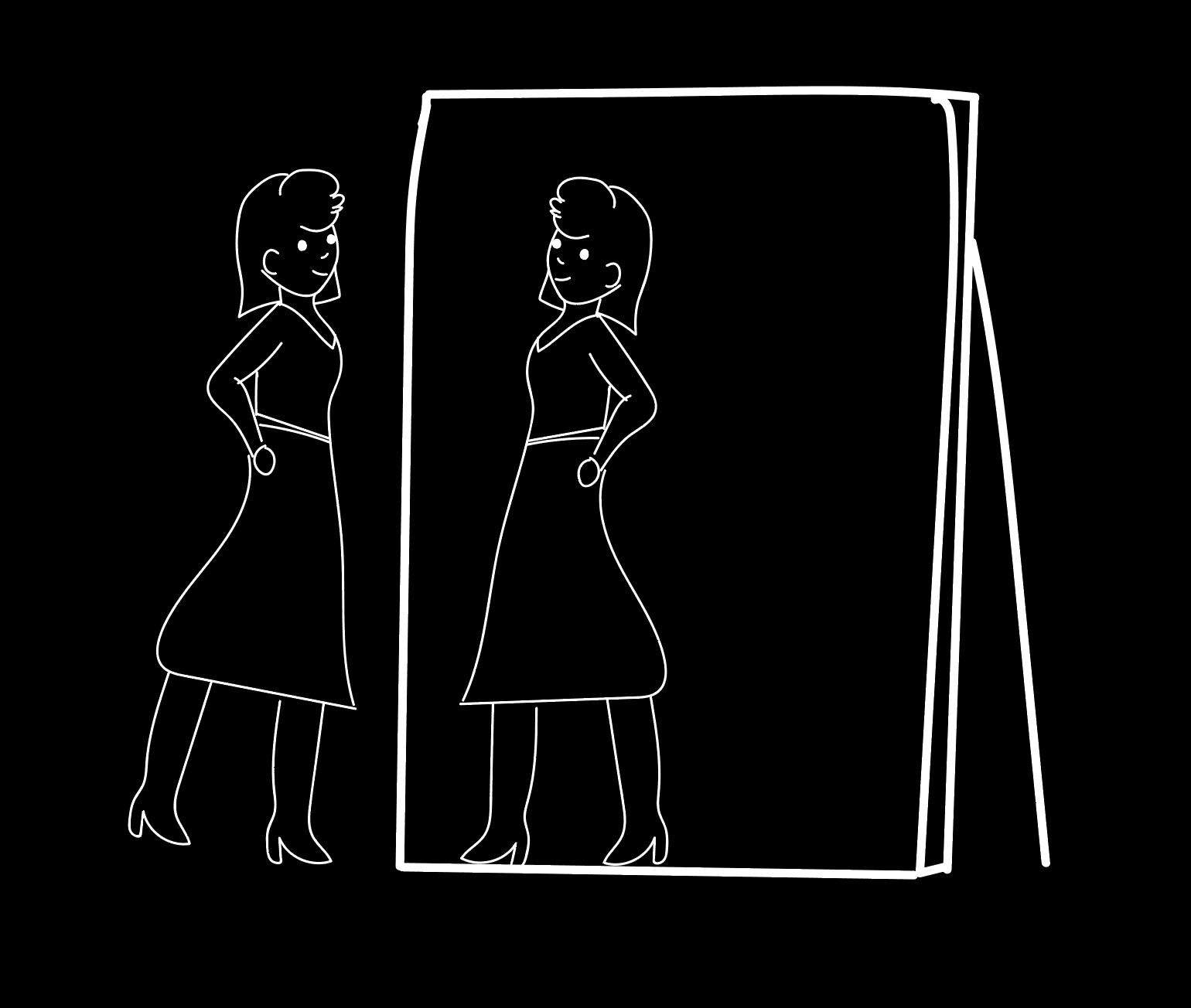
How can the teenager find what's triggering her eating disorder?

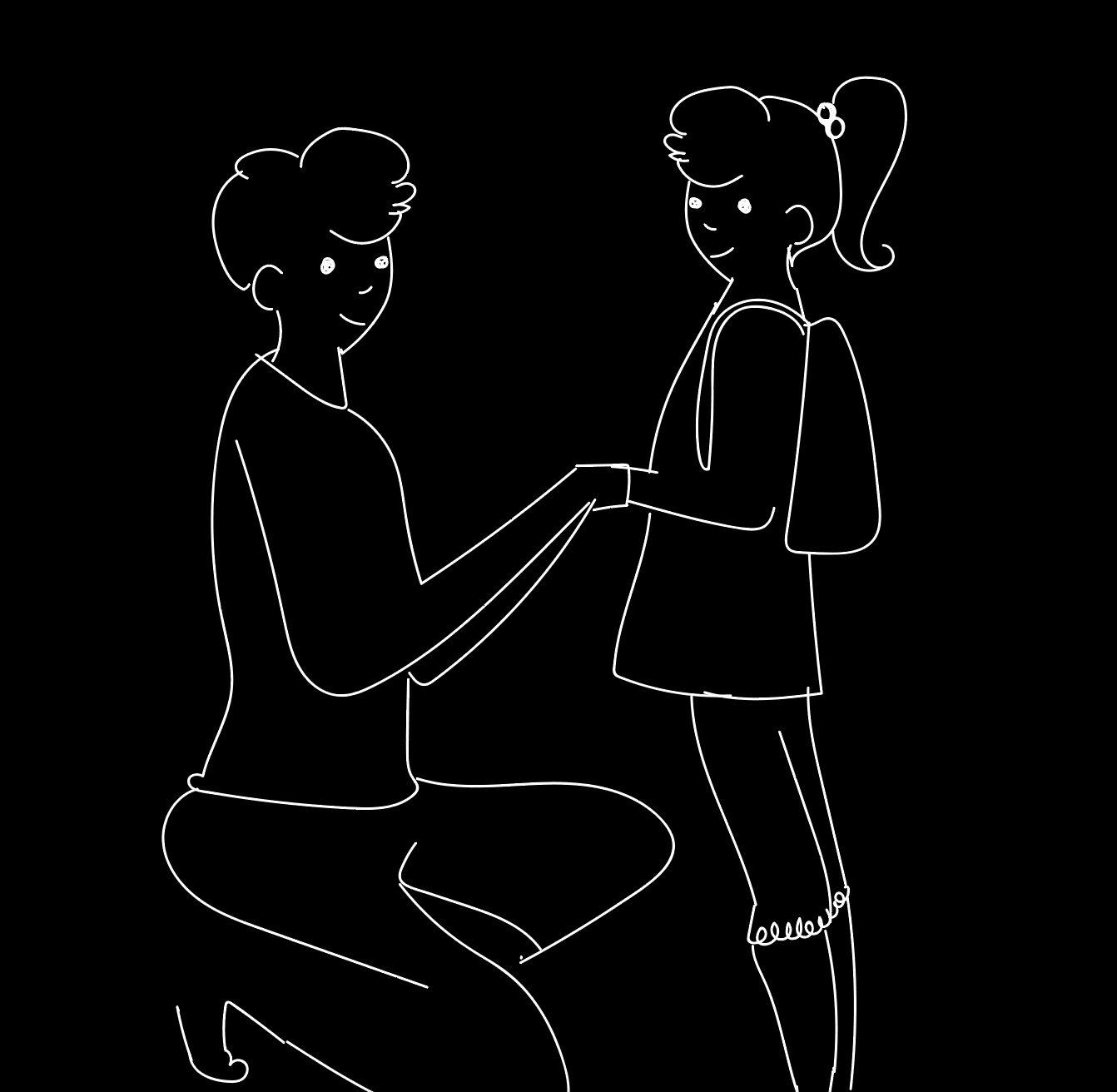
How can the parent connect more with her child who struggles with emotional regulation?

How can the parent connect more with her child who struggles with emotional regulation?

How can the teacher stop student outbursts?

How can the teenager find what's triggering her eating disorder?

How can the parent connect more with her child who struggles with emotional regulation?

When I joined as a volunteer Product Design Lead, journaling was already part of the product, but just barely. It was a single static prompt, a cover image, and a basic text box. It worked, but it didn’t feel like anything. There was no emotional depth, no real reason to come back, and it didn’t reflect curaJOY’s mission of long-term connection and well-being.

So I took a step back and asked: How might we support deep personal reflection while introducing meaningful social connection into the journaling experience?

Framing the Problems

The challenge was initially ambiguous. CuraJOY was looking to add more activities to their app to create more modes of engagement and give more ways to add reflection and connection.

I reframed this into key researchable questions:

  • What motivates users to return to journaling over time?

  • What makes reflection feel meaningful rather than performative?

  • How do users navigate the tension between privacy and connection?

This framing helped guide both method selection and design direction.

The challenge was initially ambiguous. CuraJOY was looking to add more activities to their app to create more modes of engagement and give more ways to add reflection and connection.

I reframed this into key researchable questions:

  • What motivates users to return to journaling over time?

  • What makes reflection feel meaningful rather than performative?

  • How do users navigate the tension between privacy and connection?

This framing helped guide both method selection and design direction.

Research & Discovery

To understand both user behavior and underlying motivations, I led my team in using a mixed-methods approach:

  • Heuristic audit (Nielsen’s 10 heuristics)
    to quickly identify usability gaps and structural issues. This was run by myself and my team of designers to not only understand where the current state of the designs needed to be improved but also to allow us to understand the problem space more deeply.

  • Remote think-aloud cognitive walkthrough sessions
    to observe real-time behaviors, confusion, and emotional reactions 9 sessions were run in the first round of testing. My team and I pulled from a broad range of ages to get the full scope of potenchal users and all patients had to be fluent in english.

  • Surveys
    to quantify user motivations, consistency, and perceived value across a broader group

This combination allowed me to move beyond surface-level usability issues and uncover deeper barriers.
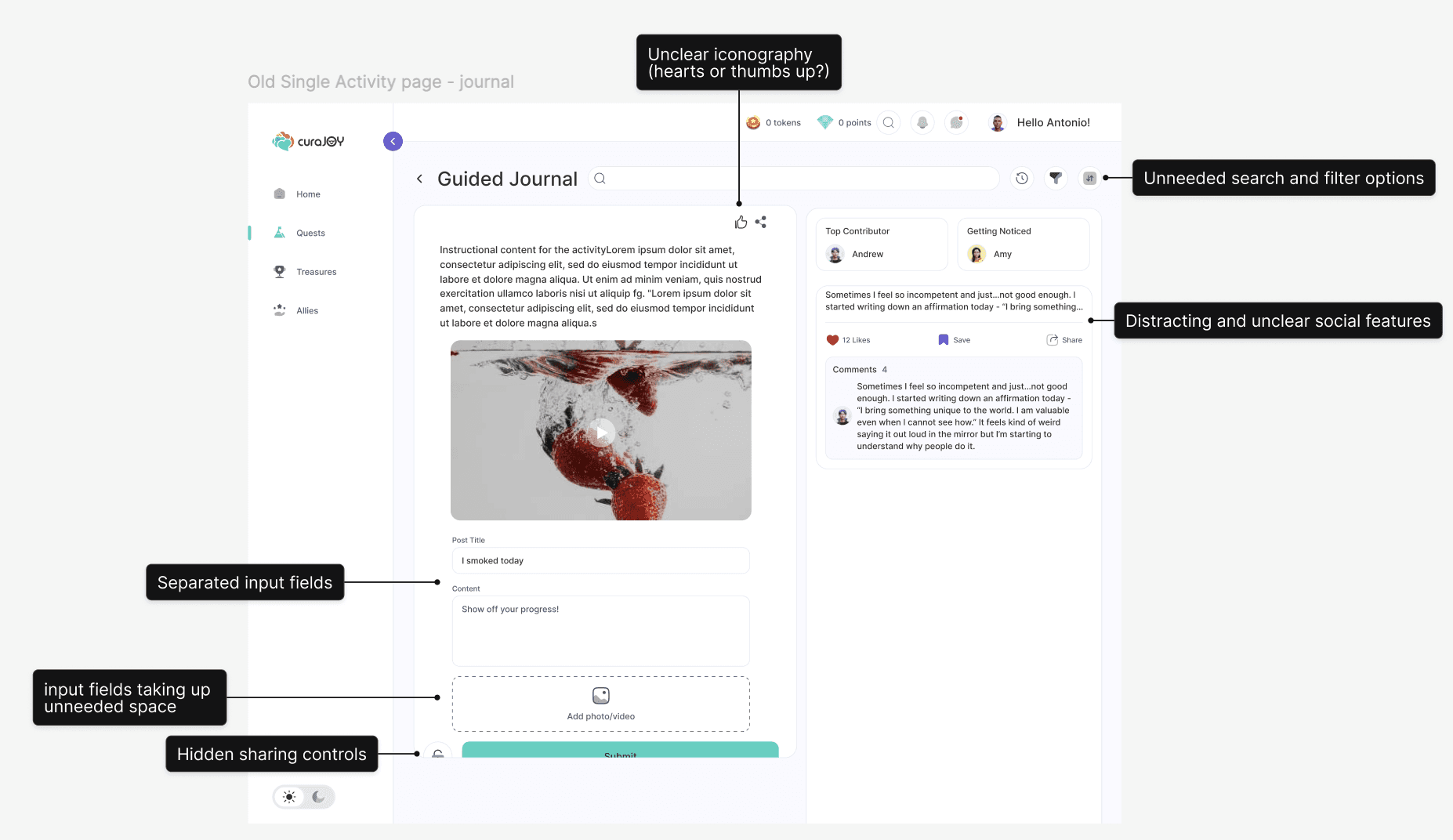
Showing problem areas with the current design of the journal activity. Doing heuristic audit with my team early on helped as really understand the product on a deeper level as we were onboarding.
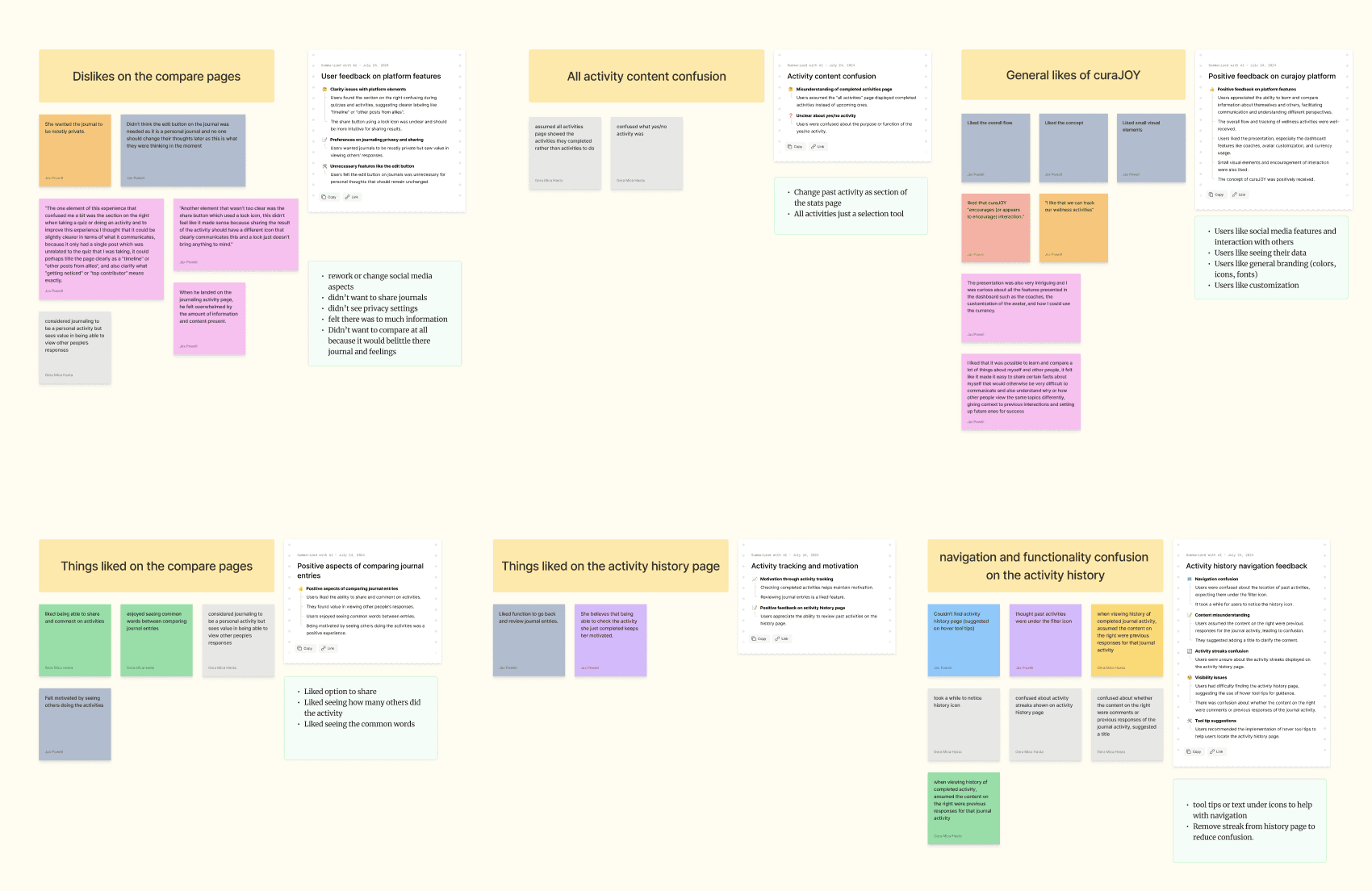
Affinity diagram from the first round of usability testing, showing confusion about the sharing of journal entries and the inability to find sharing controls.

To understand both user behavior and underlying motivations, I led my team in using a mixed-methods approach:

  • Heuristic audit (Nielsen’s 10 heuristics)
    to quickly identify usability gaps and structural issues. This was run by myself and my team of designers to not only understand where the current state of the designs needed to be improved but also to allow us to understand the problem space more deeply.

  • Remote think-aloud cognitive walkthrough sessions
    to observe real-time behaviors, confusion, and emotional reactions 9 sessions were run in the first round of testing. 

  • Surveys
    to quantify user motivations, consistency, and perceived value across a broader group

This combination allowed me to move beyond surface-level usability issues and uncover deeper barriers.

Guided by empathy, curiosity, and equality, I synthesized findings through affinity mapping, clustering observations across usability, emotional engagement, and trust.

This revealed three core tensions shaping the journaling experience:

Reflection vs. surface-level interaction

Users wanted depth, but the experience didn’t support it

β€œI’m not so sure what I understand from this…” - Tester

β€œI’d rather do a bullet list of what happened… not really journaling.” - Tester

Desire for connection vs. fear of exposure

Users were open to sharing, but anxious about who could see their entries

β€œI wouldn’t like it. I want my journal to be private.” - Tester

β€œPeople can give you advice… if you’re willing to open up.” - Tester

Motivation vs. lack of structure

Users struggled to return consistently without guidance or accountability

β€œI’m not sure if I’m able to align myself with this kind of activity.” - Tester

β€œI’m not really into journaling.” - Tester

From these patterns, I translated insights into three core design principles:Introspection, Connection, and Safety

Guided by empathy, curiosity, and equality, I synthesized findings through affinity mapping, clustering observations across usability, emotional engagement, and trust.

This revealed three core tensions shaping the journaling experience:

Reflection vs. surface-level interaction

Users wanted depth, but the experience didn’t support it

β€œI’m not so sure what I understand from this…” - Tester

β€œI’d rather do a bullet list of what happened… not really journaling.” - Tester

Desire for connection vs. fear of exposure

Users were open to sharing, but anxious about who could see their entries

β€œI wouldn’t like it. I want my journal to be private.” - Tester

β€œPeople can give you advice… if you’re willing to open up.” - Tester

Motivation vs. lack of structure

Users struggled to return consistently without guidance or accountability

β€œI’m not sure if I’m able to align myself with this kind of activity.” - Tester

β€œI’m not really into journaling.” - Tester

From these patterns, I translated insights into three core design principles:Introspection, Connection, and Safety

Solution Design

From there, I led my team in the redesign around three core needs: introspection, connection, and safety.

  • Introspection

    • Journaling should feel like a space to actually think and process. We redesigned the experience to be calmer and more intentional, helping users go deeper instead of just writing surface-level responses.

  • Connection

    • Journaling is usually a solo activity, but it doesn’t have to be isolating. We introduced shared prompts so people could reflect alongside others. This added a sense of accountability and made the experience feel more meaningful.

  • Safety

    • None of this works if people don’t feel safe. We made privacy controls really clear and upfront, so users always know who can see what. That clarity helps build trust and makes it easier to be honest.

What I Designed

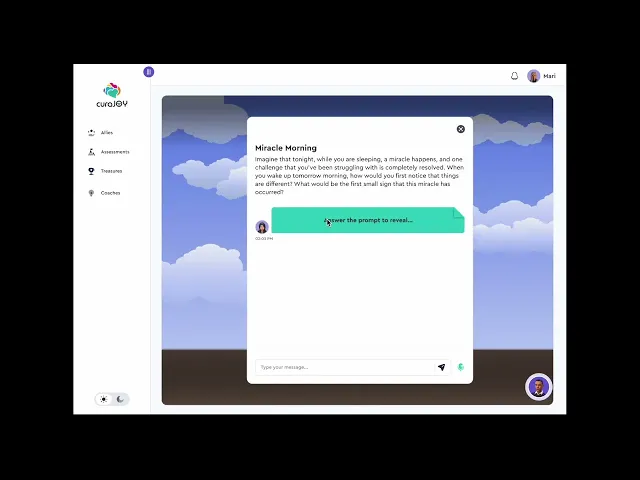
1. AI-Guided Reflection

instead of a single static prompt, journaling became conversational. The AI asks follow-up questions, helping users reflect more deeply and keep going.
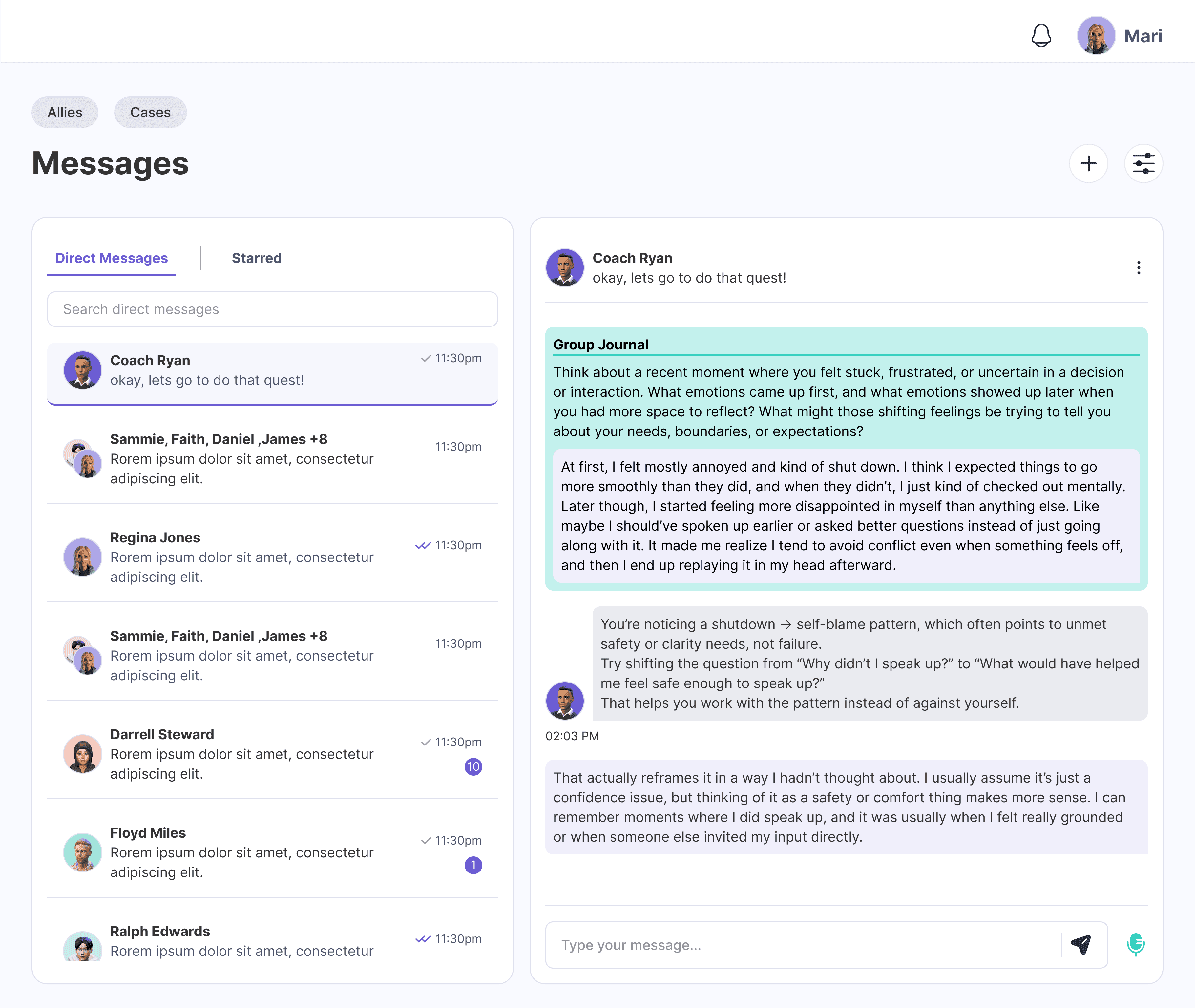
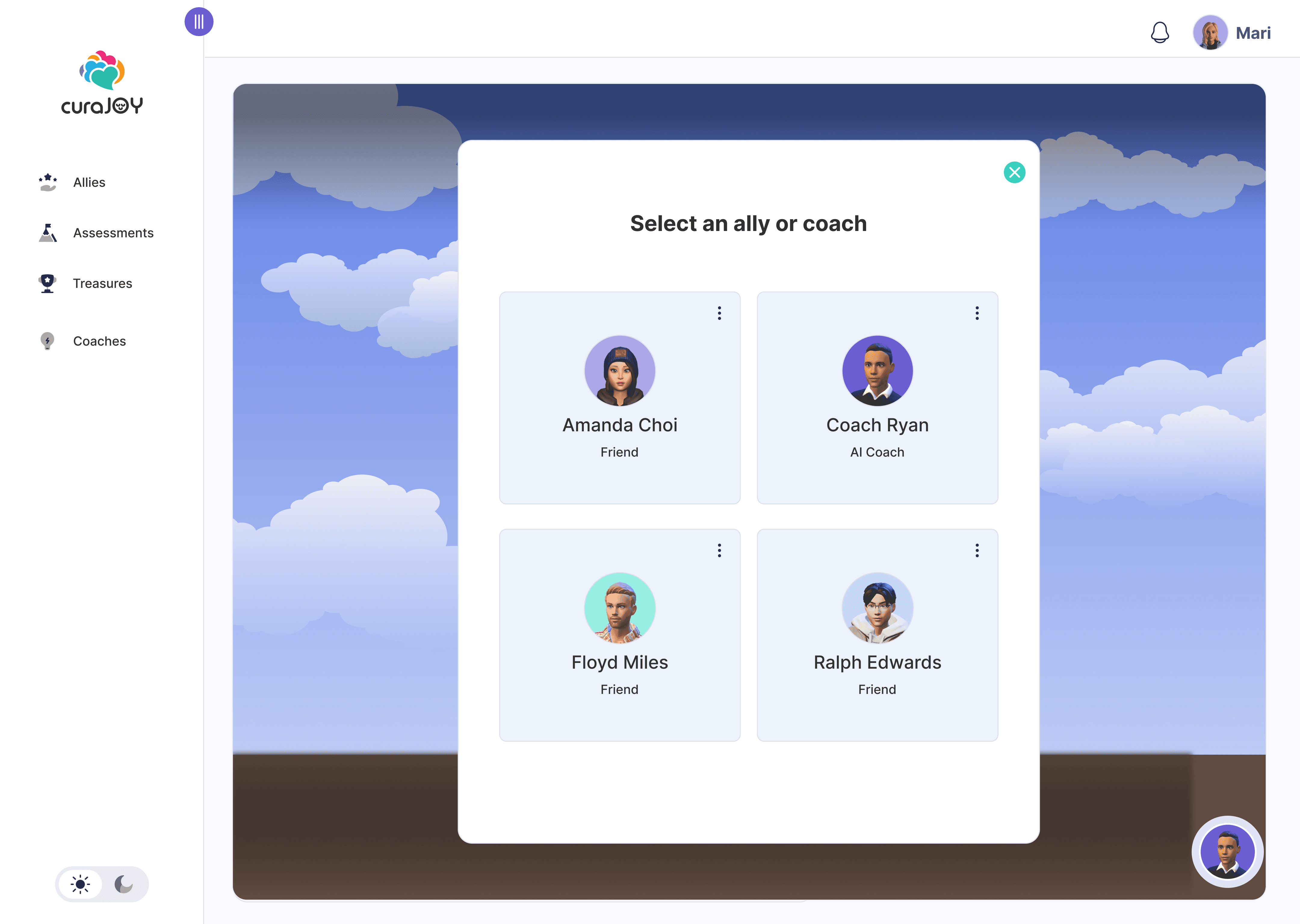
2. Shared Journaling

Users can respond to prompts with friends or family. Responses stay hidden until everyone submits, which incentivizes filling out the prompts to see others' responses.
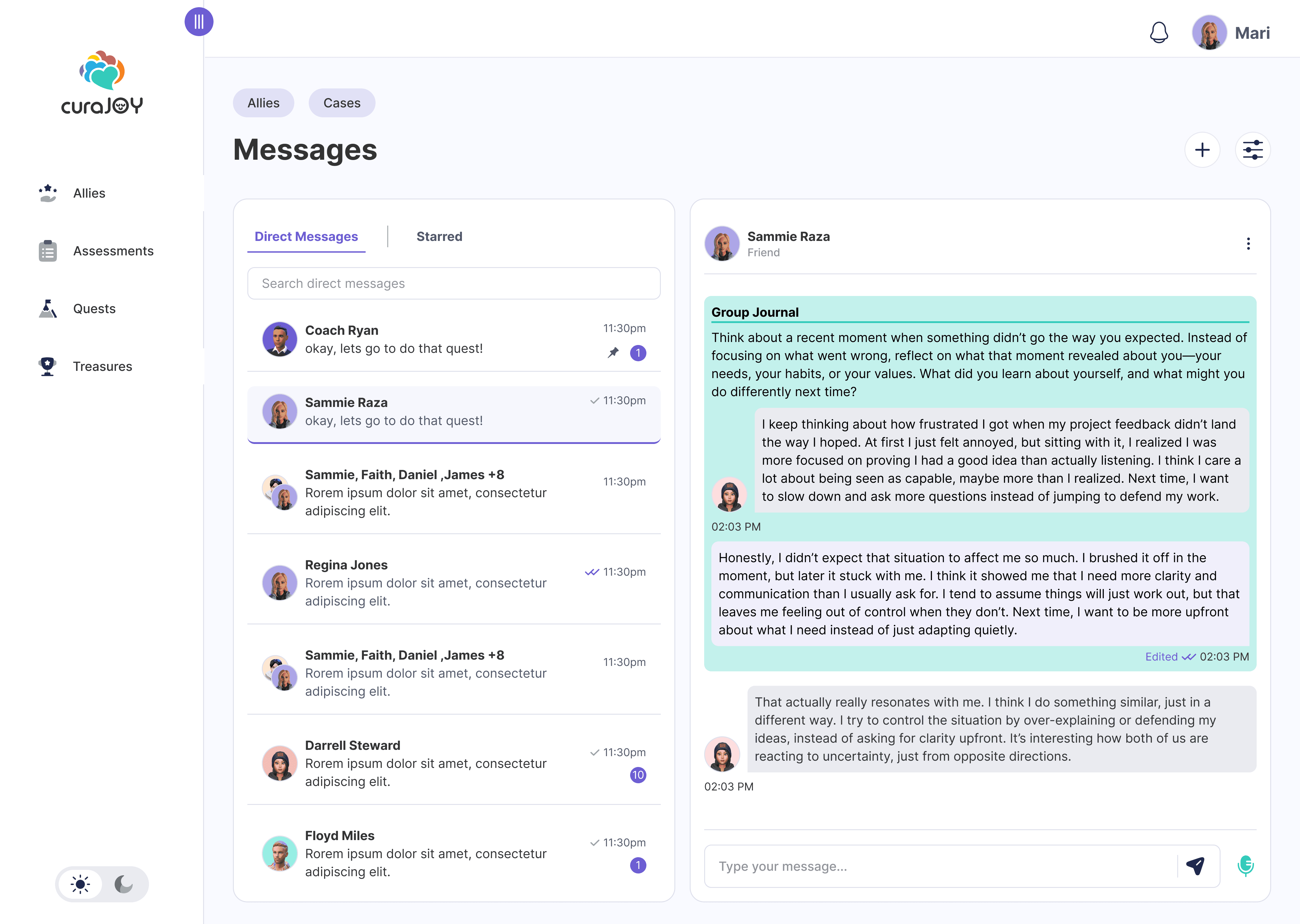
3. Explicit Privacy Controls

Before writing, users choose exactly who can see their entry. No guessing, no ambiguity, just clear control.
Side Chat…

Reader

What were the trade offs of using AI for this feature?

Jax

Great Question! Allowing the AI coach to be apart of the journal deepens reflection through follow-up questions.

Reader

I see the value in that.

Jax

However, the main perpouse to give a place of reflection for those that would like to not share their reflections with others and still get reflection. AI is used in a way to strenthen privacy not replace the social connection with others completely

Validation

We wanted to make sure this actually felt better, not just looked better.

So we ran:

  • Another round of think-aloud walkthroughs.

  • Another round of surveys measuring engagement, trust, and delight.

We saw clear improvements in:

  • Emotional engagement

  • Comfort with sharing

  • Overall perceived value of journaling

Side Chat…

Reader

Why didn’t you run interviews with individuals or family groups to gauge how they would react and engage with this reframing of the journal?

Jax

I agree, that would have been a valuable addition.

Reader

Why did you end up going a diffrent route for testing?

Jax

Given the project scope and timeline, we prioritized testing across the journaling experience alongside two other new activities being developed for curaJOY. This meant focusing our research efforts on ensuring each feature was validated and ready for development within the same cycle.

Results

Journaling had previously been sitting in the backlog, but once we showed how it could support curaJOY’s core mission, it quickly became a priority.

  • Contributed to a 4.7% increase in overall user satisfaction (Based on user surveys)

  • Strengthened sense of community through shared prompts

  • Improved trust via clear, user-controlled privacy boundaries

Reflection

This project really changed how I think about journaling. I used to see it as something deeply personal and private, but through research I started to see how it can also be social, supportive, and even collaborative when it is designed with the right boundaries. That tension between privacy and connection became one of the most important things I had to design for.

Methodologically, this project pushed me to grow a lot. I leaned heavily on qualitative user testing, but one challenge was balancing what users said with what they actually did. Some participants expressed interest in social features, but their hesitation and emotional reactions during testing showed discomfort around visibility and comparison. Learning to pay attention to those moments and not take feedback at face value was a big shift for me.

Stepping into a lead role for the first time also meant balancing vision, collaboration, and execution at the same time. I had to advocate for more introspective and meaningful experiences while working within constraints like time, scope, and the need to test multiple features together. There were tradeoffs. We could not go as deep on every concept as I wanted, and some features like comparison moved forward even when the signals were mixed. Figuring out when to push and when to align with the team was a challenge I had to navigate throughout the project.

I also learned that designing for something as personal as reflection requires a different level of care. It is not just about usability. It is about emotional safety, clarity, and trust. That realization changed how I think about research. It is not only a way to validate features, but a way to understand people’s boundaries and vulnerabilities.

I am really proud of what we built, and even more excited about how this project reshaped the way I approach design. It pushed me to think more critically, listen more closely, and design with greater intention.

How I Aligned This Project

Empathy

This project required going beyond what users said and paying attention to what they felt but didn’t always articulate. Especially around privacy, vulnerability, and social sharing, I learned to design from emotional signals as much as verbal feedback. Empathy here meant designing for comfort, hesitation, and trust.

Curiosity

I started with an intentionally vague problem β€œmake journaling more engaging” and turned it into structured, researchable questions about motivation, meaning, and social dynamics. Curiosity drove me to challenge the assumption that journaling must be purely individual, and instead explore how reflection changes in a relational context.

Equality

I designed with the understanding that users have different comfort levels, cultural expectations, and emotional boundaries around sharing personal reflections. Equality showed up in how I structured privacy controls, ensured user agency in visibility, and avoided defaulting to β€œsocial by design” without consent or clarity.

Joy

Instead of treating journaling as a clinical or obligation-driven activity, I explored how reflection could feel lighter, more engaging, and more human. The introduction of conversational AI prompts and shared reflection spaces was aimed at making introspection feel less isolating and more emotionally rewarding.

At a glance

What is this about?

I redesigned curaJOY’s journaling experience to move beyond static reflection and toward a more meaningful solution.

What did you do?

I lead a team of product designers through research, and then I translated ambiguous product goals into researchable questions, synthesized user insights, and redesigned the experience around AI-guided reflection and shared journaling.

Then what happened?

My solution helped reposition journaling from a low-priority feature to a core engagement driver aligned with curaJOY’s wellness mission.

LinkedIn

Email

Medium

This website was made with 🍡 & πŸ’š

LinkedIn

Email

Medium

This website was made with 🍡 & πŸ’š

LinkedIn

Email

Medium

This website was made with 🍡 & πŸ’š