
Bringing Inclusivity and Mindfulness to Birding



The 30-second version
I identified this as an underexplored opportunity and pitched Merlin as our capstone partner. I then led a four-phase research study, combining six semi-structured interviews, field observations, two mixed visual ability co-design workshops, and analysis of nearly 6,000 app reviews, to understand how mindful birding could work for everyone, not just blind birders. The findings are now shaping Merlin's design direction around reflections and sharing.
Overview
Birding is typically framed as visual and checklist-driven: spot the bird, identify it, log it, move on. Blind birders practice something fundamentally different: a slower, sound-centered, presence-focused relationship with nature.
When I started researching blind birding, I saw more than an accessibility gap. I saw a design opportunity: this mindset was something every birder could benefit from, not just birders who are blind or low vision.
How might we bring the reflective mindset of mindful birding to everyone?
My Contributions
Partnership
Did extensive desk research and business evaluation to create a pitch deck to convince Merlin that we brought value to them as partners.
Pitched research proposal and design direction to Merlin, securing them as our industry partner
Presented research findings to Merlin and the UW accessibility community
Research
Planned and conducted interviews with both sighted and blind and low vision participants
Planned and conducted field observations of both sighted and blind participants
Led co-design activities
Analyzed nearly 6,000 app reviews
Vibe-coded R visualizations to surface patterns across app review data
Synthesized findings into product opportunities
Accessibility
Planned and conducted interviews with both sighted and blind and low vision participants
Planned and conducted field observations of both sighted and blind participants
Built a custom audio tool to facilitate a sound-based co-design activity

Initial pitch deck to Merlin to partner for our research and design capstone project.
Securing the Partnership
Our program offered an easier path: pick from a pre-lined-up sponsor with a project already scoped. We decided not to take it, and chose instead to find our own problem and pitch a partner under no obligation to say yes.
Problem discovery: An existing study on blind birding pointed us toward mindful birding, a deeper, sound-first way of connecting with nature that both blind and novice birders were already practicing, whether or not they had a name for it. That became our real opportunity: how this practice could make birding more accessible to birders of all abilities, and how it deepens people's connection to nature and to themselves.
The pitch: I built a pitch deck showing Merlin what we'd bring: an underexplored user population, a research angle aligned with their audio-first product, and a fully scoped 10-week study ready to execute, all within their real roadmap and bandwidth constraints, before we'd earned any claim on their time.
The outcome: I presented the pitch to Merlin's team. They agreed to partner with us and thanked us for the work and research behind it.
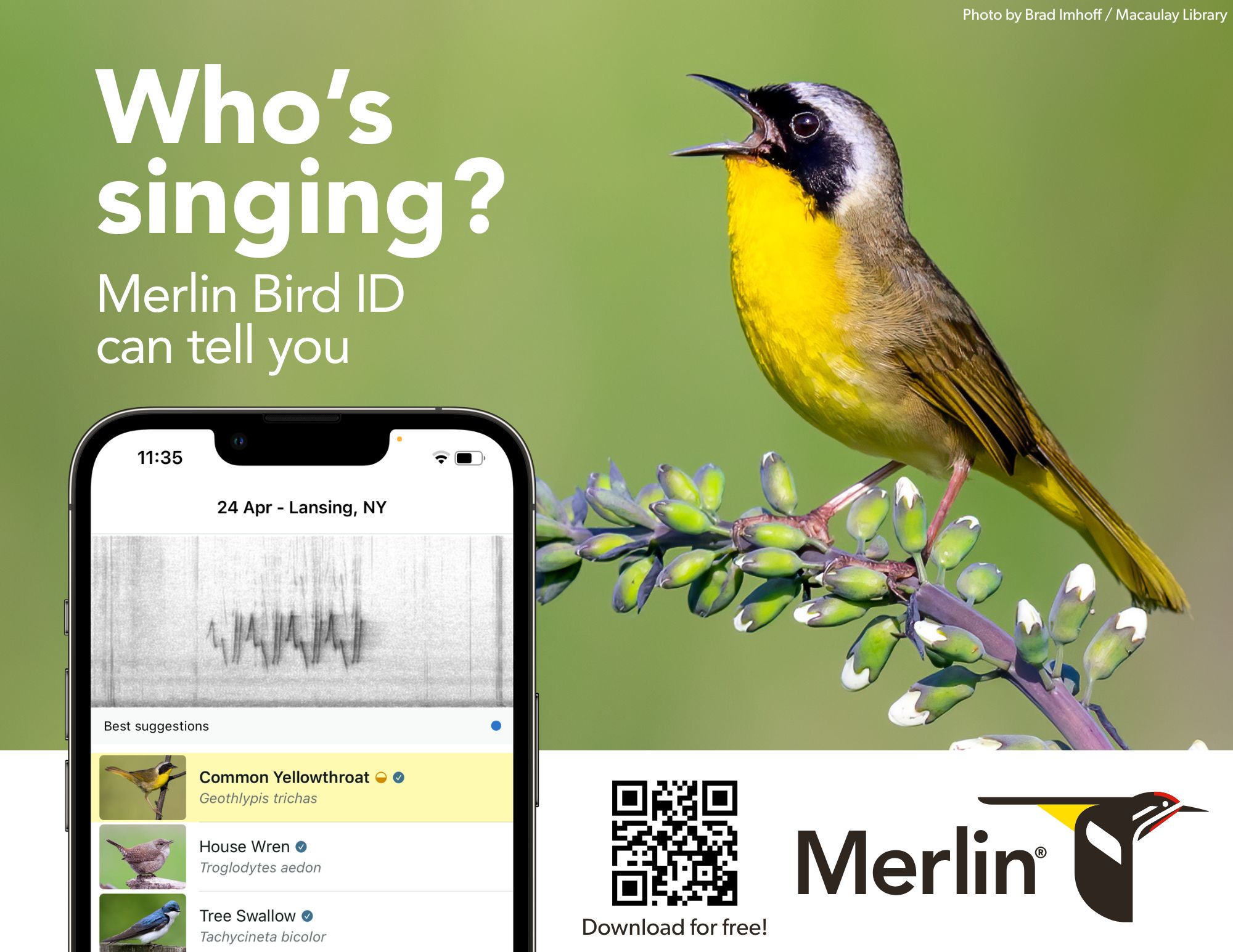
Merlin Bird ID App
What is mindful birding?
"Birding quietly, intentionally and gently, with the aim of deeply engaging with and enjoying the birds and nature around you."
- Birdability
Research Goals
Three guiding questions:
RQ1: When and how do people want to engage with mindful birding?
RQ2: How do people want to store, revisit, and share birding audio?
RQ3: How can the birding-by-ear experience be improved through Merlin?
Who We Talked To
Novice birders were participants with self-reported birding experience who had not yet invested in binoculars or developed strong visual identification habits.
Blind and low-vision birders were participants who self-reported vision status.
Recruitment process. I recruited through birding clubs, blind birding mailing lists, and Audubon societies.
Research Approach
I helped create a four-phase research study designed to move from broad exploration to generative co-creation.

Phase 1 — Semi-Structured Interviews (n=6)
We interviewed six birders:
three novice sighted birders
three blind or low-vision birders
Novices were deliberately chosen as participants because they hadn't yet invested in binoculars or developed strong visual habits, making them more open to ear-based and mindful approaches than expert birders tend to be.

Interview findings research report highlighting important findings and creating empathy between Merlin and their real users by labeling interview participants as their spark birds.
Phase 2 — Field Observations
To add to our data, we got participants to bird in real environments while we observed their behaviors and mannerisms while birding. One session was with novice sighted birders, and the other one was with blind birders. Observing in context revealed behaviors that wouldn't surface in an interview.
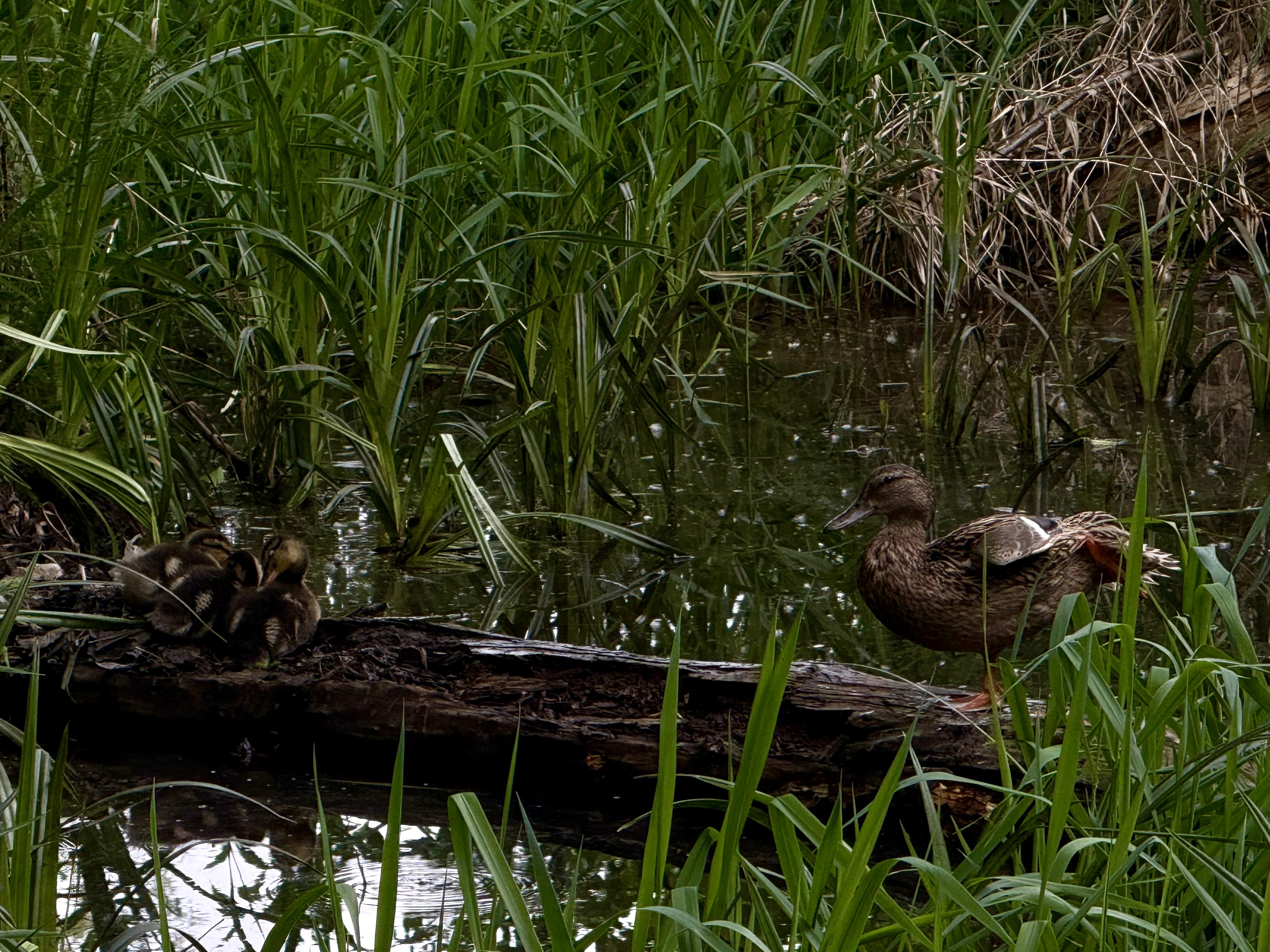
Phase 3 — Quantitative App Review Analysis
To see whether our findings scaled, I analyzed nearly 6,000 Merlin App Store reviews, using Claude Code to help generate R scripts for visualization and pattern analysis. The large dataset reinforced themes we had already begun seeing in interviews.

Data collecting methods with tech stack

Research report on qualitative data gathered from the Merlin app reviews data.
Phase 4 — Co-Design Sessions
I helped run two mixed visual ability workshops:
one remote (2 blind participants, 1 sighted)
one in-person (2 sighted, 1 blind)
We guided each group through three activities. I led the second activity, looking at what was most crucial to participants when logging incidental birding experiences. This directly informed what we prioritized in our designs and gave us a bigger picture idea of what people value most when sharing and looking back on birding experiences.

Activities:
Formal birding log: Participants listened to an audio/video recording of a birding outing and decided what they'd want to log and share from the experience.
Incidental birding log: A time-pressured scenario where you spot a rare bird at a bus stop with 5 minutes to capture it. What do you log? What do you share?
Collaborative audio design: Using a vibecoded "Bird DJ" tool that let participants mix bird calls, environmental audio, mnemonics, and spoken notes, groups co-designed a weekly birding recap experience together.
Key insights
1. People forget they can go back.
Birders rarely revisit their own past recordings or field notes, not because they don't value them, but because nothing prompts them to. When we surfaced old media during sessions, participants lit up.
2. Two distinct motivations drive what people want to log.
Co-design revealed a clear split: participants logging to learn wanted vocalization types, mnemonics, habitat, and bird behavior. Participants logging to reminisce wanted who they were with, where they were, their emotional state, and, only loosely, which birds they saw. These require different features.
3. Sharing birding memories is harder than it looks.
Participants struggled to share because their notes were too personal, their recordings often had private conversations layered over the birds, and their birding-specific content would land flat with non-birder friends. There was no easy middle ground between raw and private and too niche to share.
4. How people share varies by generation and visual ability.
Older blind participants preferred sharing in person or via email. Younger sighted participants gravitated toward Instagram Stories. No single sharing format served everyone.
Research Questions, Answered
Impact

Our presentation section at the CREATE community day at the UW
Reflection
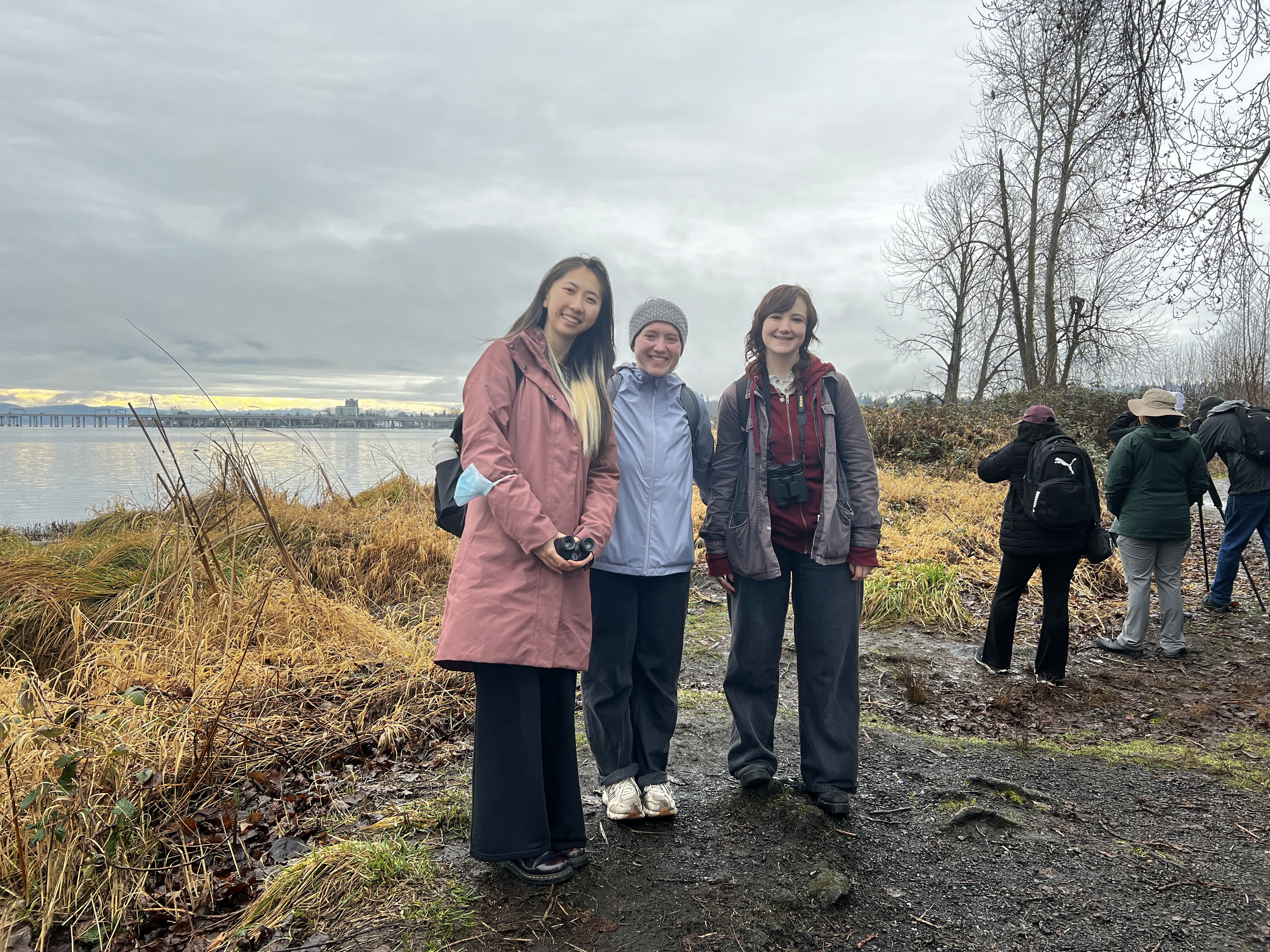
My first time birding with my team
Before this project, I had never gone birding, conducted research with blind and low vision participants, or facilitated a co-design activity with mixed visual abilities in the room. Going directly to Merlin forced us to be rigorous before we even had a client. Our preparation was our credibility.
The deeper lesson was about mixed-ability research design. The friction between perspectives in the room surfaced tensions that homogeneous groups would have smoothed over, and taught me that centering underrepresented users doesn't narrow a design problem. It opens it up.