
Fortune Mini-Golf
A Physical Interactive Experience About Choice and Fate
Overview
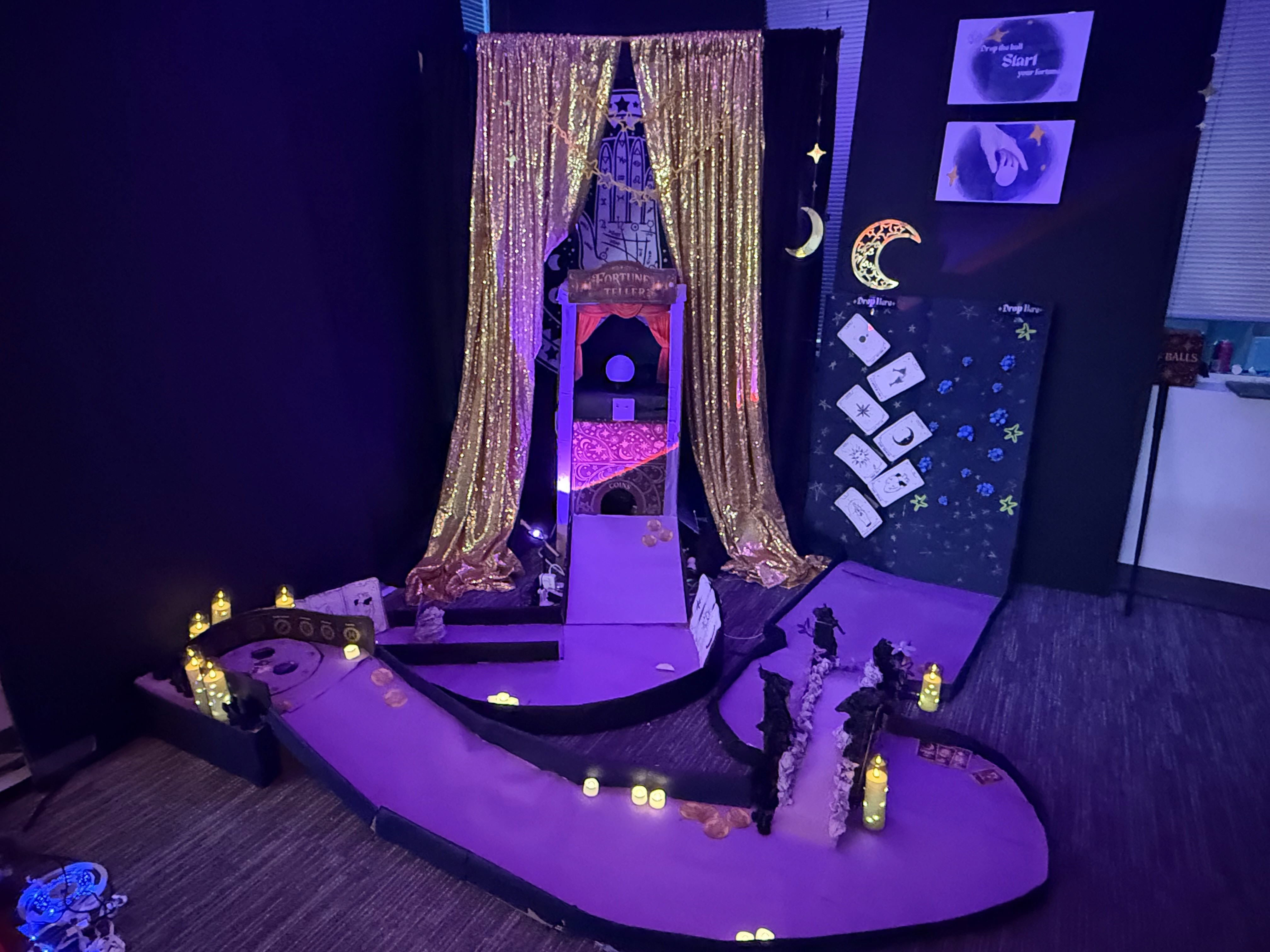
For a class project, my team was tasked with designing an interactive mini golf experience. As graduate students navigating an uncertain and rapidly changing world, we were drawn to the theme of fate—specifically, the tension between choice and predetermined outcomes.
What did I do?
Our goal was to create a playful, interactive experience that explores how personal choices shape outcomes, while also introducing an element of unpredictability. Additionally, this was my first time working on a physical prototyping project, requiring me to learn new tools and methods beyond digital design.
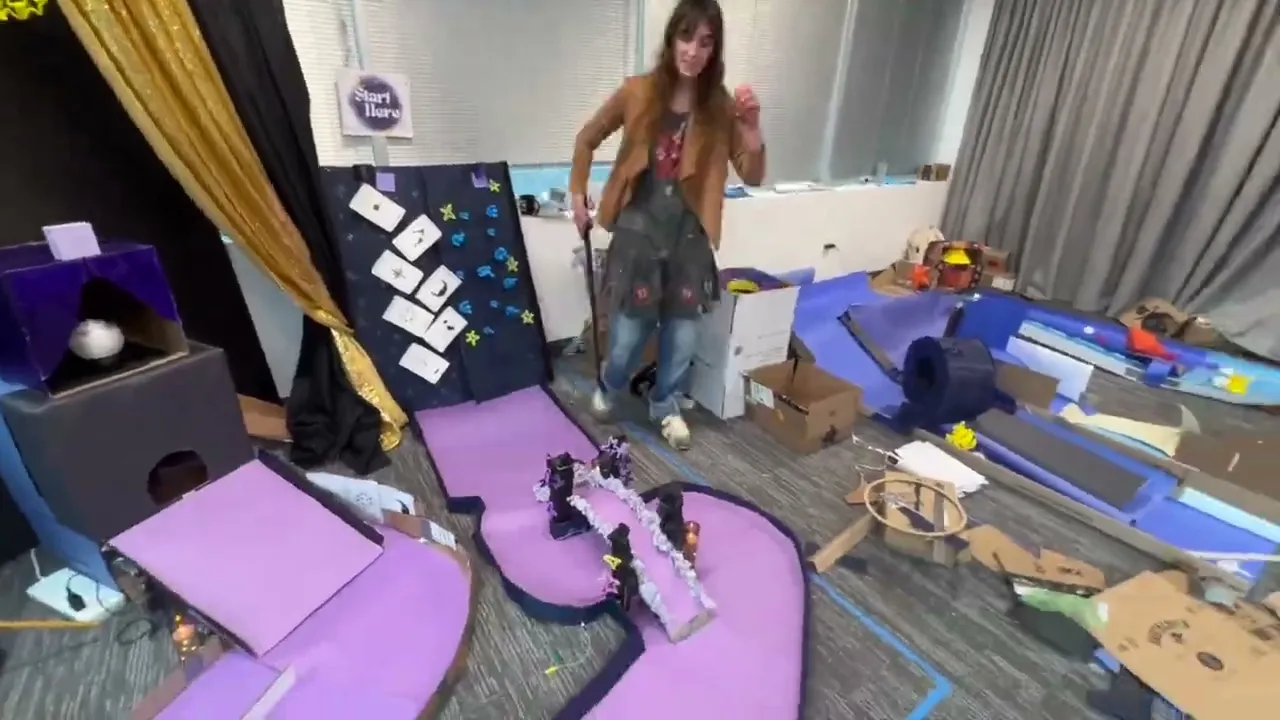
We designed a branching mini golf course where each path represented different decisions a player could make. These choices directly influenced the experience:
A crystal ball installation at the end of the course would light up and deliver personalized audio feedback based on the paths taken
A mini printer produced a physical “fortune,” giving players a tangible takeaway tied to their journey
The course structure emphasized exploration, agency, and curiosity
On the technical side, I:
Helped prototype and refine the physical interactions
Learned to work with hardware components like servos
Participated in testing and iterating on how users moved through and understood the experience
We also conducted user testing to evaluate:
Whether users understood that their choices impacted outcomes
How engaging and intuitive the physical interactions felt
How did it end up?
The final experience successfully blended play with reflection, helping users connect their in-game choices to personalized outcomes in a fun and memorable way.
Players were especially engaged by:
The cause-and-effect relationship between their decisions and the final fortune
The novelty of receiving a physical artifact as a takeaway
The immersive, interactive nature of the course
Personally, this project marked a major growth moment:
My first experience designing and testing a physical system
Gained hands-on skills with hardware (e.g., servos)
Learned how user testing differs in physical environments, where movement, timing, and spatial understanding all play a role